
Zero Emission Transport Examples
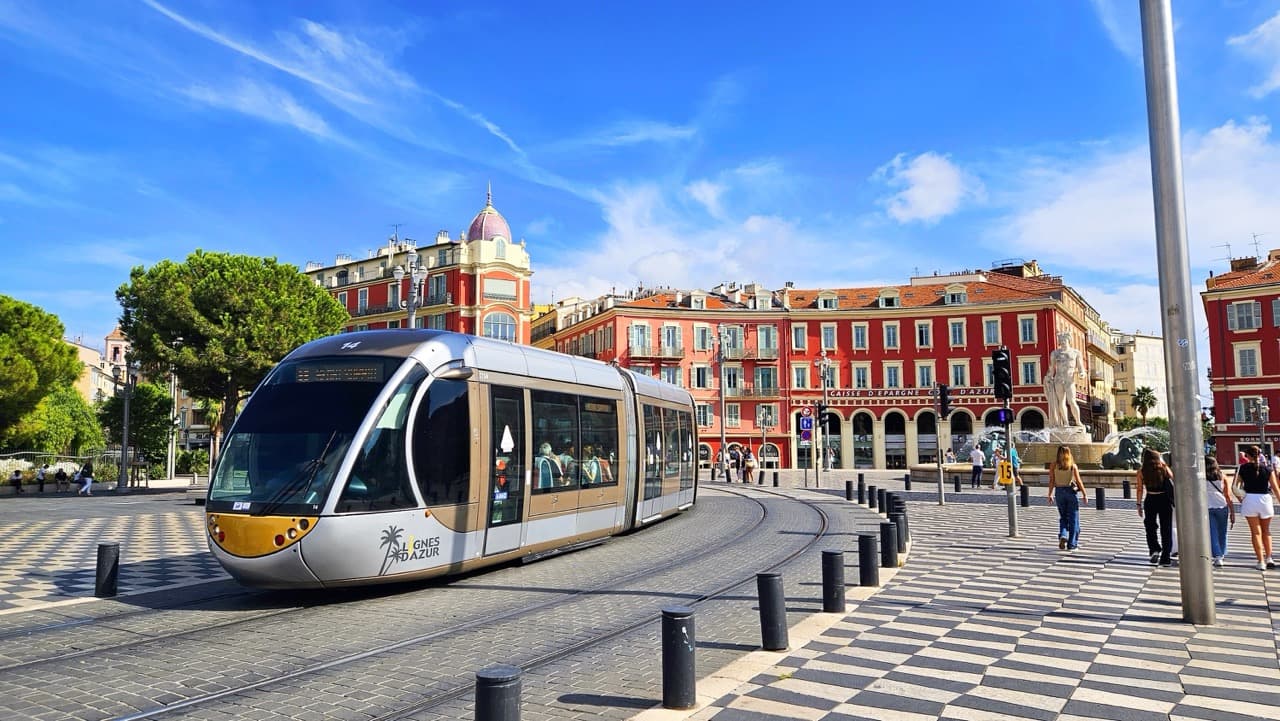
France is accelerating electric bus investments to decarbonize urban public transport. In the Côte d'Azur region, electric buses supported by more than 150 fast DC charging units serve on the Nice-Monaco-Menton route.
In Paris, some lines operated by RATP have begun running entirely with electric buses. These implementations contribute to reducing carbon emissions in public transport while saving thousands of tons of CO₂ annually.
France plans to develop electric road systems (ERS) on highways to reduce carbon emissions from heavy vehicles. These systems enable electric or hybrid trucks to be charged while in motion.
Pilot projects to be carried out in the Rhône-Alpes region between 2024-2027 will test overhead cable and underground supply charging systems.
France aims to reduce dependency on road transport through high-speed TGV lines. Strengthening railway infrastructure and using alternative energy sources aim to reduce carbon emissions in freight transport.
Railway transport forms an important part of sustainable transport policies by offering a lower carbon footprint for long-distance journeys.
Comprehensive policies are being implemented for the transformation of urban transport in France. Paris is reshaping urban transport in line with its goal of becoming a carbon-neutral city by 2030.
In this context, many streets are being closed to vehicle traffic and converted to green spaces, and applications restricting motorized vehicle access in the city center are being implemented. Additionally, the scope of low emission zones is being expanded nationwide, and investments in bicycle infrastructure are increasing. The bicycle path length has exceeded 1,000 kilometers under the Plan Vélo program being implemented in Paris.
Türkiye's Net Zero Emission Target: Transport Roadmap Project
Ministry of Transport and Infrastructure
Hakkı Turayliç Cad. No:5 06338 Emek/Çankaya/ANKARA